
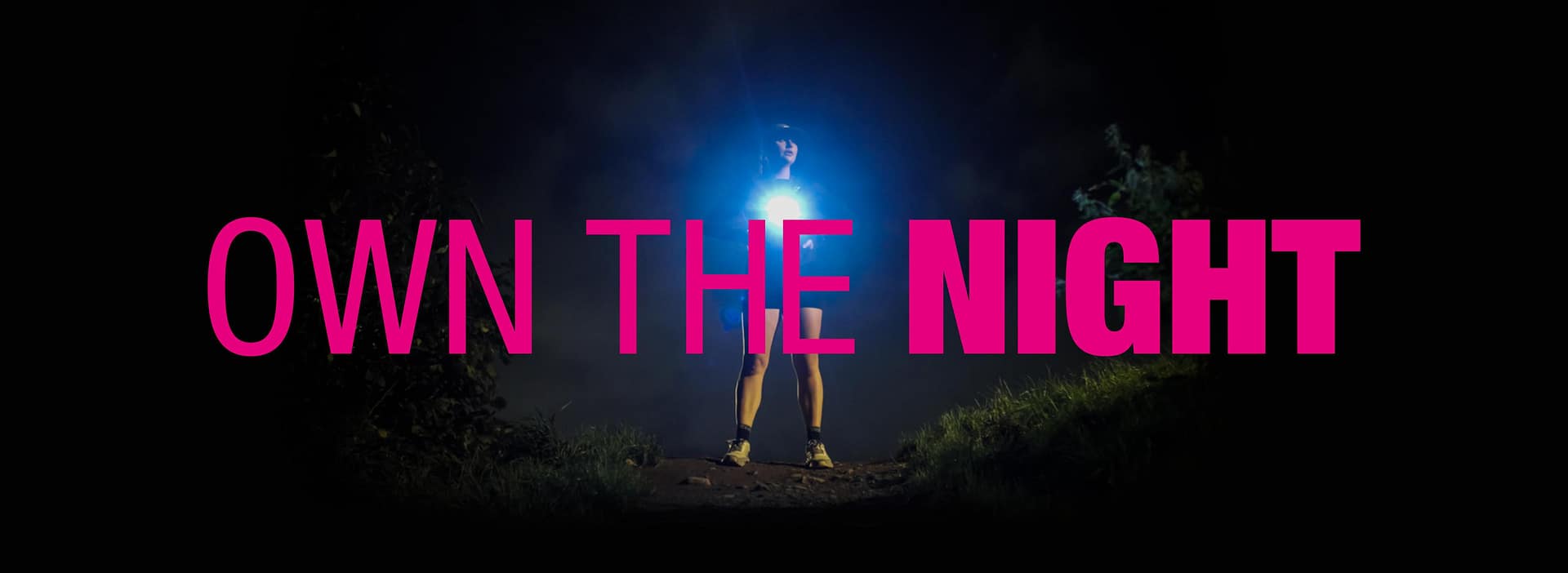
Last night (7 Oct) at the Senedd, Welsh Athletics launched their “Own the Night” campaign for women’s running safety, and I was lucky enough to attend.
The campaign highlights the steep decline in women running during the winter months due to darker nights and feeling of being unsafe. The stats[1] say it all:
- 93% of those surveyed experienced some form of public sexual harassment while running
- 72% of women in the UK change their activity behaviour during the winter months. [2]
The campaign aims to raise awareness of the issues around women’s running safety and to provide opportunities for men and women to engage with the issues. There is a series of webinars and runners’ safety guide available online. They have also called for the Welsh Government to take the following “bold steps”:
- Prioritise well-lit, safe and accessible walking and running routes in the Active Travel Plan
- Require housing developers to include areas for physical activities in residential planning
- Embed sport and physical activity in the Violence Against Women, Domestic Abuse and Sexual Violence strategy
You can read more about the campaign here.
Improving women’s running safety: are the steps bold enough?
I probably should stop at this point. I am delighted that Welsh Athletics are taking this seriously and through collaboration are bringing these issues out of the shadows. While I commend them, I am also – truth be told – a little disappointed.
I’m disappointed that my experiences, and those of every other female runner I know, are yet again reflected back on me to do something about. To take safety precautions that white, male and straight runners don’t take. To “spread the word” about the issues. If every female runner I know has had a problem, we don’t need more awareness, we need action.
Steps we could take now
In a previous life, I worked in policy (you might find an odd article from me kicking about the web) – so I get it. I get how difficult change can be. But change comes from ambition and identifying the actual problem, then designing solutions to address it. The problem of women’s running safety is not caused by women’s behaviour, it is due to the environment they are in. Women are nervous to run in the dark because of (some) male behaviour and the threat (perceived and actual) that they pose.
So instead of asking for something to be included in another plan or strategy to maybe materialise at some point in the future, let’s shine a light back on the problem. Let’s ask – now – for:
Wider community involvement
1. Local businesses to install motion sensor lights outside their premises that illuminate both our running paths and anyone else standing in the shadows. Following the event, in a brief chat Ria from Cymru Women’s Sport suggested incentivising this through cuts to business rates, a clever example of joined up thinking.
Budgets
2. Take that joined up thinking and apply to government budgets, working outside of silos and with impacts in mind. Austerity forces councils into tough decisions and with street lighting, pavement resurfacing, and public space management as single budget lines, they are easier cuts than closing a library, a school, a children’s home.[3] Sports’ budgets are sometimes protected. But as a runner, I don’t need much from your sports’ budgets – I don’t need a pitch, or a pool, or anything else you ringfence (rightly!) for sports. I just want a path that I won’t trip over on, that won’t become out of bounds when the clocks change. Work across departments to understand the wider implications of decisions.
3. A streetlight costs in the region of £600[4] to install and £40-80/per year[5] to operate, based on a quick google of public authorities’ figures. Call it £700. Let’s say we need 15 lights on a path/street. Now not all places need or want further lights; we are proud of our dark skies in Wales and there is, as ever, a balance to be struck. So we could take 93 places – one to represent every percent of women who faced harassment on a run. £976,500. Which is no good for soundbites or headlines, so a £1 million street lighting fund for councils to turn the lights on across Wales.
Young male allies
4. Go into schools and talk to the current and next generation of society. Lead the change there too, not just the spatial environment. A study[6] conducted by the N8 Policing Research Partnership in Manchester and Merseyside found the following examples of abusive behaviours encountered by female runners:
Incessant tooting by van drivers…Things shouted from cars
I did get shouted to by a group of men but they were standing in the pub and I was running past so it didn’t go on for very long as I was out of the way then
Unknown male follows [woman] as she is on a run around her estate
[Female] was out for a morning run when she has seen a male with his trousers unzipped and genitals on display.
[Female] has gone for a run…and leant down to tie her laces and the suspect has pulled his coat over [her] head and pushed her to the ground. The suspect has then put his hands down [her] pants and rubbed her genitals.
The Welsh Government are attempting to address the surge in violence against women through their Sound campaign, but it’s for men.
We need to go into schools and have conversations at home, talking to those under 18 to reinforce the messages from the Sound campaign. The truth is the abuse I’ve received on the streets are sometimes from grown men, but often from groups of young males. Anything from heckling to catcalling to running alongside me. A sign of aging is when you start being nervous of groups of kids hanging out and I’m certainly not demonising this group. But this isn’t hanging out, it’s disrespect, and we have a responsibility to them as well as the girls and women they direct this to.
Concluding thoughts – from awareness to action and back again
The point of this blog is not to attack the campaign at all, but to encourage us to move from awareness raising to action taking. Not the easy actions – those that women can take to improve their safety – but the bold ones. The systemic ones. The difficult ones.
But I am nervous to post this – nervous in sharing my thoughts about something I so positively welcome. Will I upset those involved? Will I do more harm than good? Should I be more grateful that the issue is getting some traction? And selfishly – will I burn bridges, be invited to the next event or irreparably damage my reputation?
But that fear is exactly what stops us speaking out about harassment and safety at all. So I accept that this may not align with how others view it but on behalf of those who need me to ask the difficult questions, I own this. And so I sign off with a quote from the pioneering Jane Goodall who died this month:
“It actually doesn’t take much to be considered a difficult woman. That’s why there are so many of us.”
As long as women are frightened to run, let’s continue to be difficult.
[1] Own the Night | Championing Women’s Running & Safety Across Wales
[2] Majority of women change behaviour getting active outdoors in winter | Sport England
[3] More than half of Welsh street lights off or dimmed at night – BBC News
[5] Street lighting facts | Shropshire Council
[6] Briefing-Report-UoM-N8-Project-Abuse-of-Women-Runners-CM-RB.pdf