
When we runners talk about strength and conditioning, we tend towards the squats of the S&C world. Lunges, deadlifts. We might think about weighted step-ups, but as soon as we’re dabbling our toes in the corner of boxes, we’re right back to pull-ups, push-ups and horizontal single arm inverted suspension rows…
Often we forget about the conditioning part of S&C.
For other sports, the C is often our primary sport – running. To be an excellent netballer, you need the strength to build injury resilience and on pitch stamina, power (etc), while you need to condition your body to rotations, lateral movements, jumping, sprinting, falling (or at least I did when I played). All of those bits fit clearly inside the conditioning box.
But running – both sprint and endurance – requires more detailed conditioning. And as runners, we have the luxury of being able to dig into running itself and not just practise the bleep test to improve our aerobic capacities.
If we strip the skill of running down, it becomes about our ABCs – agility, balance and coordination. We need to have strength and mobility to build resilient joints and muscles. We also aim to decrease our ground contact time and increase our responsiveness; we want to generate and then use power efficiently.
A lot of that can – and should be – done in the weights room. But if you want to be light and quick on your feet, if you want to build resilience from pounding up to 2.5x of your bodyweight running, then the best way of conditioning yourself for those impacts is through plyometrics.
What plyometrics are, and what they’re not
Plyometrics are explosive exercises which seek to exert the most force in the least possible time. They train our stretch-shortening cycle and therefore require an eccentric action following by a rapid concentric action. Think of it like a spring. We apply pressure, and it recoils back instantly.
Keep that definition in mind… because there are lots of plyometrics exercises online and social media videos. There are little routines promising quick gains in less than 20 minutes. While these exercises will get your heart rate up and keep you generally fit, they’re not runners’ plyometrics. Here’s some exercises which DON’T count:
- A burpee. Never seen at my classes. A burpee is a marvellous exercise for cardio – it is not plyometric.
- A mountain climber. As above – unless you perform them explosively, it’s for endurance/cardio, not plyo.
- Kettlebell swings. They use momentum and control, not your explosive stretch-shortening cycle
- Skater jumps. These are plyometrics… when performed continuously. If you want to ensure you’re doing these correctly, consider them as continuous lateral bounds.
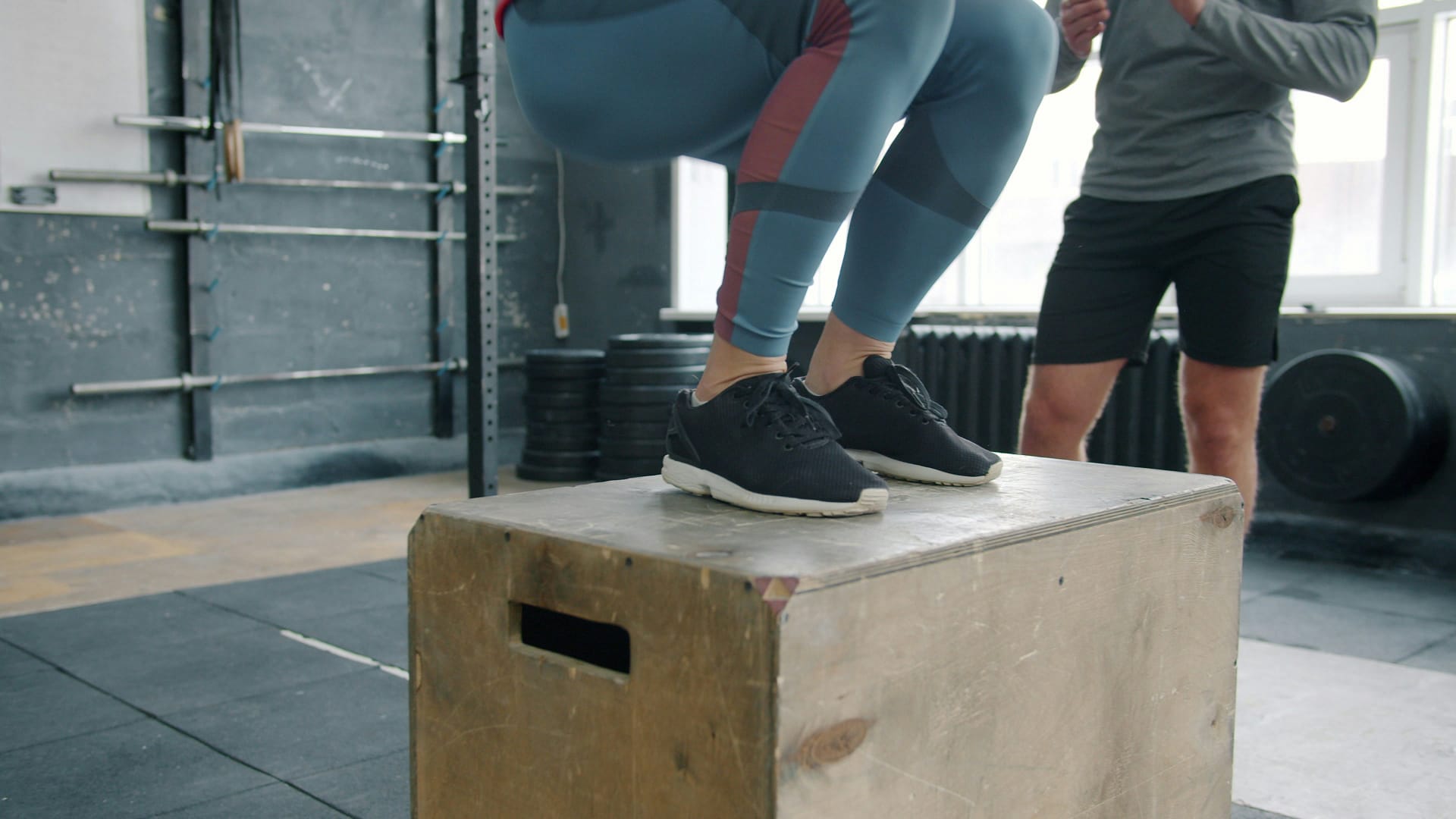
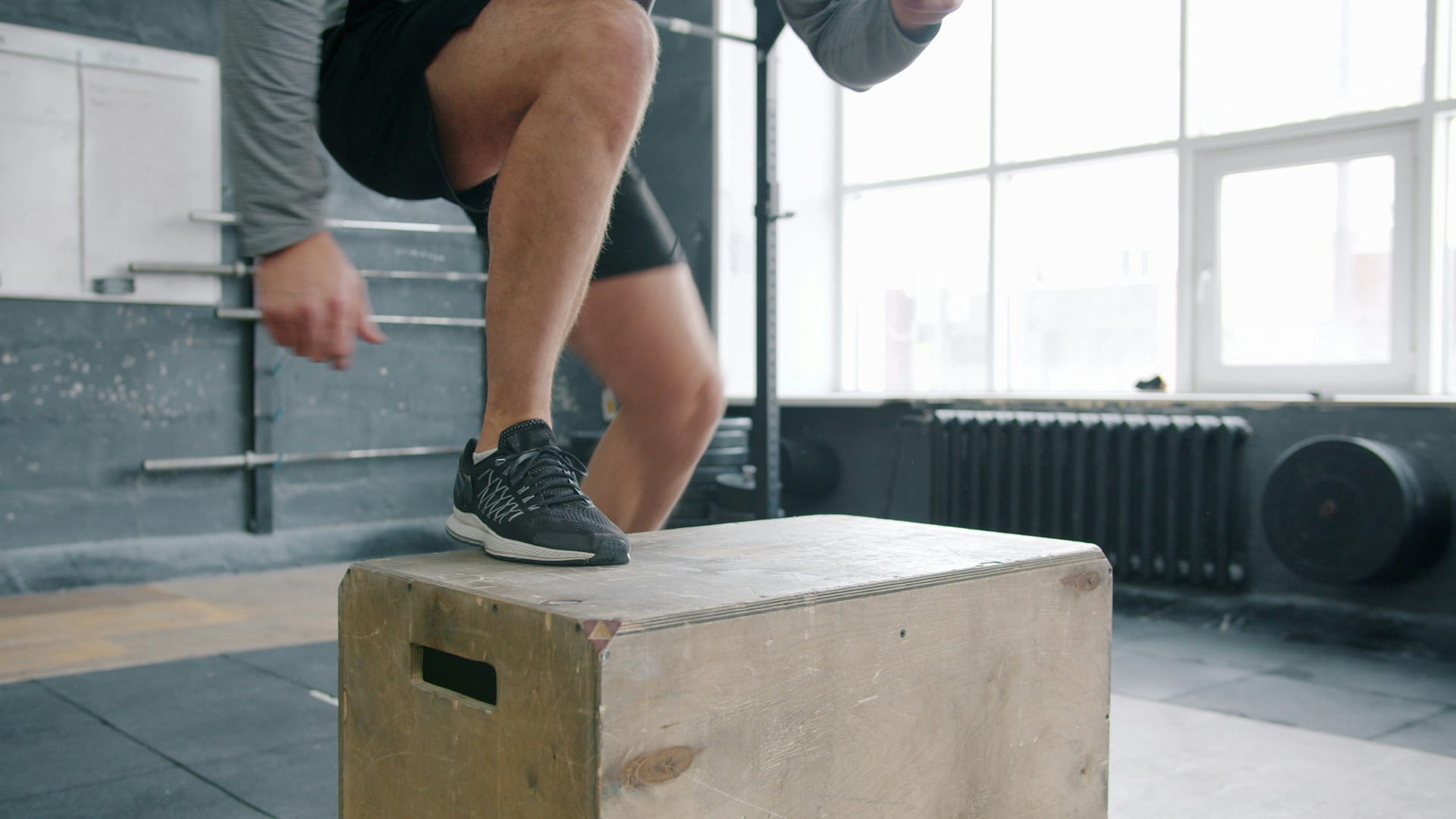
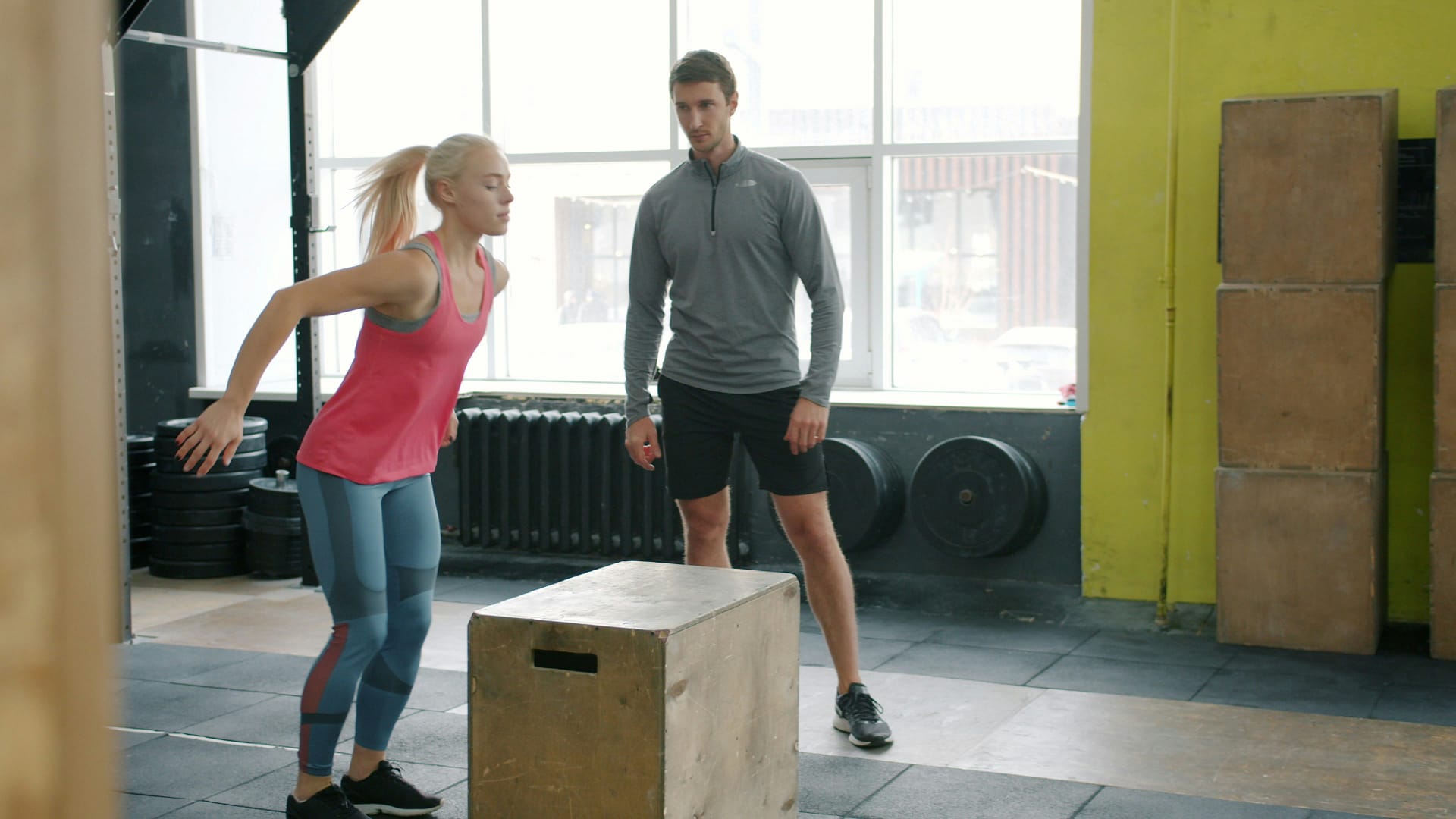
- Cross-fit box jumps. There are loads of ways to do a box jump, but the classic see if you can land on a really high box multiple times isn’t plyometric. It *is* still conditioning, and like all these other exercises are perfectly good value to runners, but they are not working your stretch-shortening cycle.
A truly plyometric exercise is one which is explosive, reactive and has minimal ground contact time.
The plyometrics conundrum
Part of plyometrics beauty – their simplicity – can actually become a problem. With some exercises – like toe tapping – it’s very easy to keep going before your body is conditioned to deal with… well the conditioning.
Think about it. To support your body to better tolerate running, plyometrics essentially asks you to hurl your body around more than it would running. Jumping for instance can lead to forces of up to 7x bodyweight. So if your body is not conditioned for it, injuries can happen.
There are clear guidelines for plyometrics dosage (or foot contacts) based on your level of experience:
Beginners: 80-100 contacts
Intermediate: 100-120 contacts
Advanced: 120-140 contacts
It can also be less. Recent research has shown that 40-60 contacts[1], twice a week, of plyometrics is still effective.
And these should be quality contacts, not just quantity. Focusing on achieving the right form and technique, with contact number 99 as clean and precise as the last. They need to be performed at 80-100% of your effort, with up to 1:10 work/rest ratio.
The plyometrics continuum
So you know you have to do plyometrics safely, and properly, in order for them to be effective – and you also know there’s a big injury risk with doing them wrong. How can beginners safely build plyometrics tolerance? One framework used is the plyometric continuum.
But before you even get there, it’s worth going through this checklist. Can you:
1. Stand on one leg for 30 seconds? And then again with your eyes closed?
2. Are you free from injury or pain? Do you have a full range of motion in your joints?
3. Can you perform basic foundational movements – a squat, a lunge, a hinge?
If you say yes to those, then hop 10 times each leg. If still no pain, then you can progress.
The plyometric continuum breaks down the short stretch cycle into five stages. For runners, who want to focus on lower body power, we have:
1. Eccentric absorption (i.e. landing) e.g. an altitude landing
2. Concentric development (force generation) e.g. seat to box jump
3. Jump integration (putting 1 and 2 together) e.g. broad jumps, CMJs
4. Continuous jumps (repeated quick efforts) e.g. hurdle hops
5. Shock method (aggressive contacts) e.g. depth jumps
To build an effective plyometrics programme means working your way through this framework – but not rigidly. Weave in lighter continuous jumps such as pogos into earlier phases which are low load, but will help build ankle strength and stiffness. Use this grading system as a tool to understand the stretch-shortening cycle, and what you are trying to achieve, using the age old training principle of periodization.
The takeaway
Beginning a plyo programme can feel daunting, but remember to keep the contacts down, the quality up, and move your way through the framework exercises as a broad guide.
Embrace the fact plyometrics can be integrated more easily than other forms of S&C. I have one client who took great delight in doing some broad jumps in the middle of a gym. Another who thoroughly enjoys ankling by the side of their treadmill as a warm up. The power of plyometrics is, we can bring it in to our daily routines far more easily than loading up a squat rack.
And if you’re not sure where to start – come and see me in one of my S&C classes
[1] The Effect of Low-Volume Preseason Plyometric Training on Force-Velocity Profiles in Semiprofessional Rugby Union Players – PubMed